
 442080642223
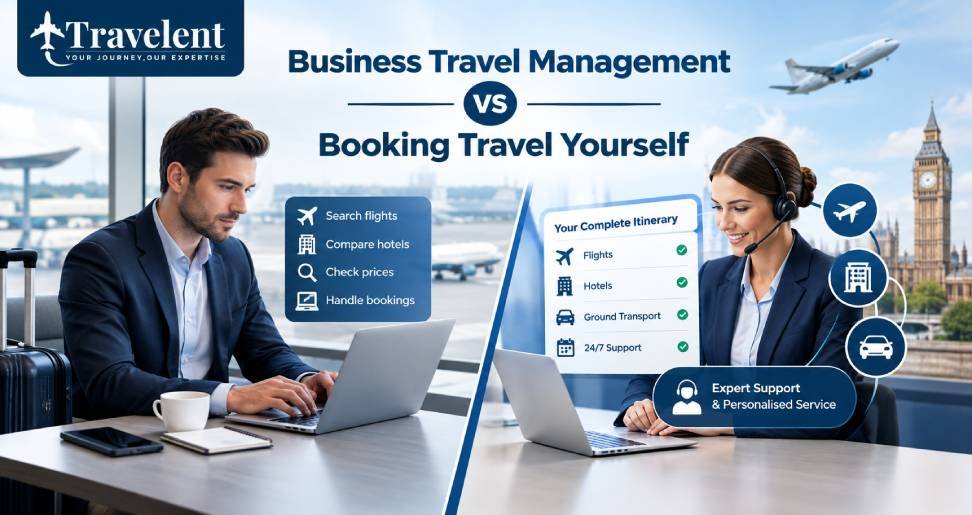
Business travel is an essential part of modern business operations. Employees may need to attend conferences, meet clients, visit suppliers, explore new markets, or travel between company offices. As business travel increases, companies often face an important question: Should employees book their own trips, or should the organisation use professional business travel management?
At first glance, booking travel yourself may appear simpler. Employees can search for flights and hotels online, compare prices, and make reservations within minutes. However, corporate travel involves more than finding a flight or hotel. It can include travel policies, expense control, schedule coordination, changes, cancellations, traveller support, and unexpected disruptions.
This is where professional business travel management can provide a structured alternative. Travelent, for example, provides business travel solutions covering flights, accommodation, itineraries, and ground transportation.
What Is Business Travel Management?
Business travel management involves organising and overseeing corporate travel through a dedicated travel management provider. Instead of individual employees managing every part of a trip independently, a professional team coordinates travel arrangements according to the company’s requirements.
A business travel management programme can include:
- Flight and rail bookings
- Hotel reservations
- Airport transfers
- Itinerary management
- Travel policy support
- Changes and cancellations
- Travel reporting
- Traveller assistance
- Corporate travel planning
- Emergency and disruption support
For companies with frequent or complex travel requirements, having a centralised process can reduce administrative work and make travel easier to manage.
Travelent’s corporate travel management service covers flights, hotels, itinerary management, policy-related support, reporting, and 24/7 assistance for business travellers.
What Does Booking Business Travel Yourself Involve?
Booking travel yourself generally means employees or administrative staff search for and reserve flights, hotels, trains, transfers, and other travel services independently.
This approach can work for occasional trips. An employee might compare several flights, choose a suitable hotel, make the reservations, and submit expenses afterwards.
However, the process can become more complicated when several employees travel frequently. Different people may use different booking websites, choose different accommodation, follow inconsistent processes, or make bookings that do not align with company travel policies.
As travel volume grows, managing these individual bookings can require considerable administrative attention.
Business Travel Management vs Booking Travel Yourself: Key Differences
1. Time and Administration
One of the biggest differences is the amount of time required.
With self-booking, employees are responsible for researching options, comparing schedules, checking policies, making reservations, and managing changes.
Professional travel management transfers much of this responsibility to travel specialists. Travelent describes its business travel service as handling flights, accommodation, itineraries, and ground transportation so businesses can focus on their objectives.
For organisations with frequent travel, this can make the overall process more organised.
2. Cost Control
Booking travel yourself does not necessarily mean choosing the lowest overall business travel cost. The cheapest flight or hotel may not always provide the best combination of location, flexibility, timing, and cancellation conditions.
Professional travel management can take a broader view of travel spending. Travelent states that its corporate service provides reporting and analytics designed to help organisations understand travel expenditure and optimise budgets.
Businesses can therefore consider the total cost of a trip rather than looking only at the initial booking price.
3. Corporate Travel Policies
Companies may have rules regarding preferred airlines, hotel categories, booking limits, approval procedures, or travel classes.
When employees book independently, maintaining consistent compliance can become difficult, particularly as the organisation grows.
A managed travel programme can incorporate corporate travel policies into the booking process and provide greater visibility over how employees arrange business trips.
4. Handling Changes and Disruptions
Business travel rarely goes exactly according to plan. Flights can be delayed, cancelled, or rescheduled. Meetings can move, and employees may need to change their return journeys.
With self-booking, the traveller usually has to identify the problem and contact the relevant airline, hotel, or booking provider.
A professional travel management company can act as a central point of contact. Travelent provides 24/7 support for booking changes, disruptions, and emergency travel requirements.
This can be particularly useful when employees are travelling internationally or outside normal office hours.
The Role of Corporate Hotel Booking
Accommodation is another important consideration when comparing the two approaches.
Employees booking hotels independently may spend considerable time comparing locations, rates, facilities, cancellation policies, and availability.
A dedicated Corporate Hotel Booking Service London can simplify this process for companies regularly sending employees to the capital. Travelent’s corporate hotel service focuses on tailored accommodation options and business travel support.
Centralising hotel arrangements can also make it easier for businesses to maintain consistent standards across employee travel.
Business Travel Management Can Support Executive Travel
Executives often have demanding schedules, making flexibility particularly important.
A senior employee may have multiple meetings across different locations on the same day, require premium accommodation, or need airport assistance. Coordinating these details independently can take valuable time.
Services such as an Executive Airport Meet and Greet Service can add another layer of support for business travellers who require a more streamlined airport experience. Travelent highlights airport assistance among the services available to London-based business travellers.
When Booking Travel Yourself May Work
Self-booking is not necessarily unsuitable for every business.
It may be practical when:
- A company has very few business trips.
- Employees travel only occasionally.
- Trips are straightforward.
- There are no complex corporate travel policies.
- Administrative teams have sufficient time to manage bookings.
- Employees are comfortable handling changes themselves.
For a small company with only a handful of simple trips each year, independent booking may be sufficient.
However, the situation can change as the company grows.
When Professional Travel Management Makes Sense
Professional business travel management may become increasingly useful when an organisation has:
- Frequent business travellers
- Multiple employees travelling simultaneously
- International travel requirements
- Executive travel
- Complex itineraries
- Corporate travel policies
- Frequent last-minute changes
- A need for travel reporting
- Multiple offices or locations
- Traveller support requirements
Travelent provides corporate travel management for businesses of different sizes and supports travel across the UK and international destinations.
Why London Businesses May Benefit From Travel Management
London is a major centre for finance, technology, consulting, professional services, and international business. Companies based in the capital may regularly arrange domestic and international trips.
Professional Corporate Travel Management London services can help businesses coordinate flights, hotels, ground transportation, itineraries, and traveller support through a centralised process.
Travelent provides tailored corporate travel solutions from London, including travel planning, accommodation, transportation, reporting, and ongoing traveller assistance.
Making the Right Choice for Your Business
The choice between business travel management and booking travel yourself ultimately depends on the company’s travel volume, complexity, resources, and internal requirements.
For occasional and straightforward journeys, self-booking may be practical. For businesses managing frequent trips, multiple travellers, executive itineraries, or international travel, professional management can provide a more structured approach.
The important consideration is not simply the price of an individual flight or hotel. Businesses should also consider the time spent arranging travel, managing expenses, handling disruptions, maintaining policies, and supporting employees.
Conclusion
The comparison between Business Travel Management vs Booking Travel Yourself is ultimately about more than how a flight or hotel reservation is made. It is about how efficiently an organisation manages its entire travel programme.
Self-booking can provide flexibility for simple, occasional trips, while professional travel management can centralise travel arrangements, provide dedicated support, improve visibility over spending, and simplify complex journeys.
Travelent offers comprehensive business and corporate travel management services covering flights, accommodation, itineraries, transportation, travel policies, reporting, and 24/7 traveller support.
For businesses looking to reduce administrative complexity and create a more organised approach to corporate travel, working with a dedicated travel management partner can provide a practical way to manage business journeys as the organisation grows.