 442080642223
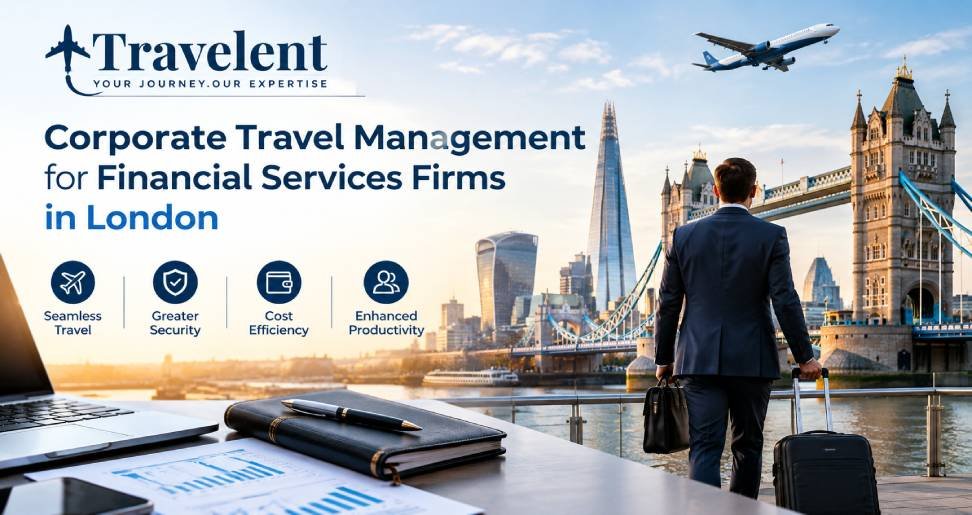
London is one of the world’s leading financial centres, bringing together banks, investment firms, insurance companies, fintech businesses, asset managers, and financial advisory organisations. For these businesses, travel is often an essential part of building client relationships, attending industry events, meeting investors, and managing operations across international markets.
However, corporate travel in the financial services sector involves more than booking flights and hotels. Firms must balance cost efficiency, employee safety, confidentiality, regulatory expectations, and the need for reliable business travel arrangements. Without a structured approach, travel expenses can increase, schedules can become difficult to manage, and employees may face unnecessary disruptions.
This is where professional corporate travel management becomes valuable. With tailored solutions from Travelent, London-based financial services firms can simplify business travel planning, improve cost control, and create a more consistent experience for employees and executives.
Why Corporate Travel Management Matters for Financial Services Firms
Financial services organisations frequently operate across multiple locations and time zones. Employees may need to travel for investor meetings, mergers and acquisitions, financial conferences, client consultations, regulatory discussions, and international business development.
Managing these arrangements internally can place pressure on administrative teams and create inconsistencies in booking procedures. A dedicated travel management strategy helps businesses coordinate their travel requirements through a structured process.
Key benefits include:
- Improved cost control: Monitor travel spending and identify opportunities to reduce unnecessary expenses.
- Greater efficiency: Simplify bookings, itinerary management, and changes to travel arrangements.
- Better employee experience: Provide convenient travel options that support productivity and comfort.
- Stronger risk management: Establish procedures for disruptions, emergency assistance, and traveller communication.
- Consistent travel policies: Ensure employees understand approved booking procedures and spending limits.
For financial firms operating in competitive markets, these benefits can support operational efficiency while allowing employees to focus on important business objectives.
Managing Travel Costs Without Compromising Quality
Cost management is a significant consideration for financial services companies. Frequent flights, premium accommodation, airport transfers, and last-minute itinerary changes can create substantial expenses, particularly for firms with international operations.
An effective corporate travel programme begins with a clear understanding of travel patterns. Businesses should review booking data, frequently visited destinations, average hotel costs, airfare expenditure, and the reasons behind last-minute reservations.
Advance planning can help secure suitable fares and accommodation before availability becomes limited. However, the lowest-priced option is not always the most cost-effective. A cheaper flight with inconvenient connections may reduce employee productivity, while a hotel far from a meeting venue can increase transport costs and wasted time.
Professional corporate travel management services help businesses evaluate these factors together. Travelent can support a more organised approach to business travel planning, helping companies consider convenience, budget requirements, and itinerary efficiency when arranging trips.
Companies should also establish approval procedures for premium travel, define accommodation limits, and review expenses regularly. These measures help maintain financial accountability without making necessary business travel unnecessarily complicated.
Supporting Executive Travel and Client Relationships
Senior executives, investment professionals, and client-facing teams often work with demanding schedules. Their travel arrangements may involve multiple meetings in different cities, short-notice changes, and a need for comfortable, reliable transportation.
Poorly coordinated travel can result in missed appointments, unnecessary delays, and avoidable stress. By contrast, carefully planned itineraries allow professionals to use their time more effectively.
A dedicated business travel management company in London can help coordinate flights, hotel reservations, ground transportation, and other travel requirements within a single itinerary.
For senior decision-makers, a business class flight booking service UK can be particularly useful when long-haul journeys require additional comfort and flexibility. The right travel arrangements can help executives arrive better prepared for important negotiations, presentations, and client discussions.
Travelent offers tailored travel support for businesses seeking a more coordinated approach to corporate journeys. By considering each traveller’s schedule, destination, and preferences, companies can create travel plans that align with their operational priorities.
Choosing the Right Accommodation in London and Beyond
Accommodation plays an important role in business travel planning. Financial professionals may need to stay near offices in Canary Wharf, the City of London, major conference venues, or client locations throughout the capital.
Choosing accommodation solely on the nightly rate can overlook important factors such as transport access, cancellation conditions, meeting facilities, and proximity to business appointments.
A well-planned corporate hotel booking service London helps businesses assess accommodation according to their travel policies and practical requirements. It can also support consistent booking procedures for employees who travel regularly.
For international visitors, hotel selection should account for arrival times, local transport connections, and the location of scheduled meetings. For employees attending multi-day events, accommodation near the venue may reduce daily commuting and improve time management.
Travelent helps businesses approach accommodation and itinerary planning with greater coordination, making it easier to organise stays around business objectives rather than treating hotel reservations as isolated transactions.
Strengthening Travel Risk Management and Duty of Care
Risk management is particularly important for financial services firms, whose employees may travel frequently or visit unfamiliar destinations. Flight cancellations, severe weather, transport disruption, health emergencies, and unexpected security incidents can affect travellers and business operations.
Employers should maintain clear travel policies, emergency contact procedures, and communication channels for employees travelling on company business. They should also consider destination-specific risks before approving international trips.
Effective corporate travel risk management UK practices can include pre-travel guidance, access to itinerary information, emergency escalation procedures, and plans for rebooking disrupted journeys.
Businesses should ensure employees know whom to contact when plans change and what steps to follow during an emergency. Where appropriate, organisations should also consider travel insurance, destination advisories, and relevant legal or regulatory obligations.
Travelent can help companies organise business travel arrangements with greater visibility and coordination. Although travel management does not replace a firm’s security, compliance, or legal responsibilities, a structured programme can make it easier to communicate plans and respond to unexpected changes.
Using Technology to Improve Travel Planning
Technology has transformed how companies arrange and monitor business travel. Digital booking tools, centralised itineraries, automated notifications, and expense-management systems can reduce administrative work and improve access to travel information.
For financial services organisations, centralised records can also support expense reviews, policy compliance, and management reporting. When travel information is organised consistently, authorised teams can identify spending patterns and make better-informed decisions about future bookings.
Businesses should choose systems and processes that protect confidential information. Access permissions, secure handling of traveller details, and appropriate data-retention practices are important considerations, particularly for organisations operating in a highly regulated environment.
Working with an experienced travel partner such as Travelent can help businesses coordinate their travel requirements more effectively, while internal teams retain oversight of company policies, budgets, and information-security standards.
Building a Sustainable Corporate Travel Strategy
Sustainability is becoming an increasingly important consideration in business travel planning. Financial services firms may want to understand the environmental impact of their travel activity while continuing to meet essential business requirements.
Practical measures include combining meetings into fewer trips, using virtual meetings when appropriate, selecting rail for suitable domestic journeys, and considering accommodation near meeting locations.
Businesses can also track travel-related emissions and evaluate lower-impact options when they meet the same operational needs. Sustainability goals should be supported by measurable policies rather than relying on assumptions about individual bookings.
Tailored travel planning can help companies assess alternatives while maintaining the flexibility needed for important client relationships and international operations.
Why London Financial Firms Can Benefit from Travelent
Corporate travel requirements vary between investment firms, insurance providers, fintech companies, and financial advisory businesses. Some prioritise executive travel, while others need regular international flights, coordinated hotel bookings, or flexible arrangements for teams attending conferences and client meetings.
Travelent supports businesses looking for tailored travel solutions that align with their schedules, budgets, and service expectations. By bringing key travel arrangements into a more coordinated process, firms can reduce administrative complexity and improve visibility across their business journeys.
Whether an organisation needs help with flight arrangements, accommodation, executive travel, or broader itinerary planning, a structured travel programme can make business trips easier to manage.
The most effective approach combines professional travel support with clear internal policies, sensible approval procedures, regular expenditure reviews, and appropriate traveller-safety measures.
Conclusion
Corporate travel management for financial services firms in London requires a careful balance of efficiency, cost control, employee wellbeing, risk awareness, and flexibility. From coordinating executive flights to arranging accommodation and preparing for unexpected disruptions, every part of the journey can influence business performance.
A structured strategy helps financial organisations manage travel more consistently, improve budget visibility, and provide employees with reliable arrangements. By partnering with Travelent, businesses can explore tailored corporate travel solutions designed around their operational needs.
For London financial services firms seeking a more organised and efficient approach to business travel, investing in professional travel management can be a practical step towards stronger planning, better employee experiences, and more effective use of company resources.