
 442080642223
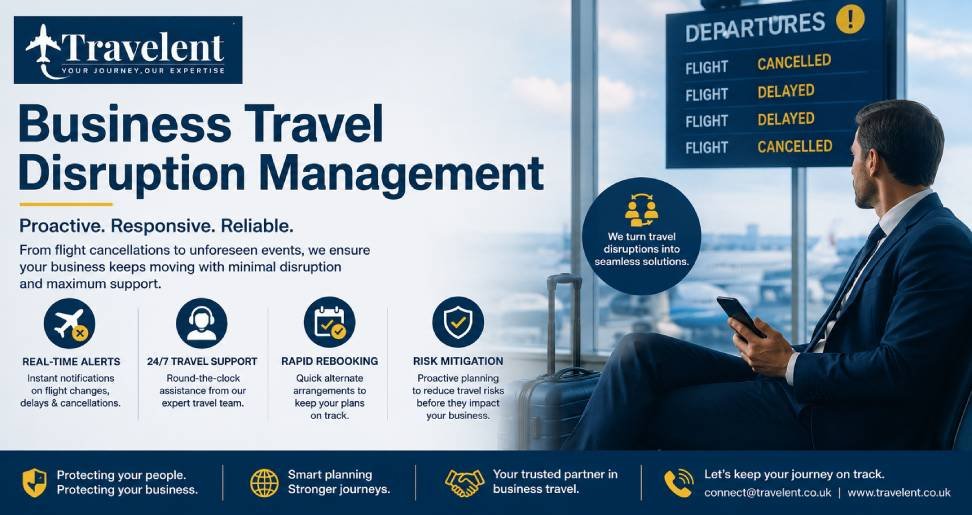
Business travel plays an important role in building client relationships, attending conferences, closing deals, meeting international teams, and expanding into new markets. However, even a carefully planned business trip can be affected by unexpected disruptions. Flight cancellations, severe weather, strikes, airport closures, geopolitical events, transport delays, and sudden changes in local conditions can quickly turn a routine journey into a serious business challenge.
This is why business travel disruption management has become an important part of modern corporate travel planning. Instead of simply reacting when something goes wrong, businesses need a structured approach that helps them identify risks, communicate with travellers, arrange alternatives, and maintain business continuity.
What Is Business Travel Disruption Management?
Business travel disruption management is the process of preparing for, monitoring, and responding to events that interfere with an employee’s business trip. The objective is to minimise the impact on travellers while helping the organisation continue its operations.
Disruptions can range from relatively minor problems, such as delayed trains or missed connections, to major incidents involving severe weather, political instability, border restrictions, or large-scale transport interruptions. Modern travel risk management increasingly focuses on visibility, communication, rapid response, and coordinated decision-making.
A strong disruption management strategy should therefore cover the complete travel lifecycle—from planning and booking to real-time support and post-trip review.
Why Business Travel Disruptions Matter
A disrupted business trip can create more than inconvenience. If an employee misses an important client meeting, presentation, conference, or project milestone, the organisation may lose valuable time and business opportunities.
There can also be additional costs associated with emergency accommodation, alternative flights, last-minute transportation, unused bookings, and itinerary changes.
Employee wellbeing is another important consideration. When travellers are stranded in unfamiliar locations, they may need immediate assistance with accommodation, transportation, communication, or alternative routes.
Effective disruption management helps organisations respond quickly while maintaining their duty of care responsibilities. Current corporate travel guidance increasingly treats travel risk management as a combination of employee protection, operational continuity, visibility, and rapid response.
Common Causes of Business Travel Disruption
Businesses should prepare for multiple types of disruption because travel problems rarely come from one predictable source.
Flight Cancellations and Delays
Airline delays and cancellations are among the most common business travel problems. A single delayed flight can cause missed connections and affect hotel bookings, meetings, and onward transportation.
Severe Weather
Storms, flooding, extreme temperatures, and other weather events can affect airports, roads, rail networks, and local infrastructure.
Transport Strikes
Railway, airport, public transport, and ground transportation strikes can make planned itineraries impossible. Travellers may need alternative routes or additional accommodation.
Geopolitical Events
Political instability, conflicts, border restrictions, and sudden regulatory changes can create significant risks for international business travellers. These situations may require organisations to modify or cancel travel plans quickly.
Health and Local Emergencies
Unexpected health emergencies or local incidents can also affect employees. Companies need clear communication procedures so travellers know where to obtain assistance.
How to Build an Effective Disruption Management Strategy
A proactive strategy can significantly improve how quickly an organisation responds when travel plans change.
1. Maintain Accurate Traveller and Itinerary Information
Companies need visibility into where employees are travelling, their flight details, accommodation, and onward arrangements. Centralised booking information makes it easier to identify affected travellers when an incident occurs.
When bookings are spread across multiple platforms or made outside approved channels, it can become more difficult to locate travellers and provide timely assistance.
2. Monitor Potential Risks
Businesses should monitor relevant travel conditions before and during a trip. Depending on the destination, this may include weather conditions, transportation updates, political developments, and other local risks.
The goal is not simply to collect information but to identify how an emerging situation could affect active business trips.
3. Create Clear Communication Channels
During a disruption, travellers need accurate information quickly. Companies should establish clear communication channels and define who is responsible for contacting affected employees.
Communication should explain what has happened, what the traveller should do next, and what support is available.
4. Prepare Alternative Travel Options
A resilient travel programme should consider backup options before an emergency occurs. Depending on the situation, alternatives may include different flights, rail services, airports, hotels, or ground transportation.
Having access to flexible travel arrangements can make it easier to adjust an itinerary without unnecessarily delaying business activity.
5. Establish an Emergency Response Process
Employees should know who to contact when something goes wrong. Travel managers should also have defined escalation procedures for serious incidents.
A mature travel risk programme typically includes planning, monitoring, alerting, response, and continuous improvement.
The Role of Technology in Travel Disruption Management
Technology has become an important part of modern corporate travel management. Integrated travel platforms can help organisations maintain itinerary visibility, identify affected travellers, communicate updates, and coordinate changes more efficiently.
Real-time information can also help travel teams move from a reactive approach to a proactive one. Instead of waiting for an employee to report a cancelled flight, a managed travel programme can identify the disruption and begin considering available alternatives.
However, technology should work alongside experienced travel professionals. During complicated disruptions, travellers may require personalised assistance rather than automated notifications alone.
Why Work With a Professional Travel Management Company?
Managing every possible travel disruption internally can place considerable pressure on employees, HR teams, executive assistants, and travel managers. A professional travel management company can provide specialised support for bookings, itinerary changes, accommodation, transportation, and emergency situations.
Travelent provides comprehensive business travel management services, including flights, accommodation, itineraries, ground transportation, and other travel arrangements. Its website also highlights a UK-based 24/7 emergency response team designed to support travellers when unexpected problems occur.
For companies that regularly send employees across the UK or internationally, working with an experienced travel management partner can make disruption response more organised and efficient. Instead of leaving employees to solve problems independently, businesses can provide a dedicated support structure throughout the journey.
Turning Disruptions Into Better Travel Planning
Every disruption provides an opportunity to improve the company’s travel programme. After an incident, businesses should review what happened, how quickly the issue was identified, how travellers were supported, and whether communication was effective.
The organisation can then update travel policies, emergency procedures, preferred suppliers, and traveller guidance based on what was learned.
This continuous improvement approach helps businesses build a more resilient travel programme rather than treating every disruption as an isolated event.
Conclusion
Business travel disruptions cannot always be prevented, but their impact can be reduced through preparation, visibility, communication, and rapid response. Companies should have clear procedures for monitoring risks, identifying affected travellers, arranging alternatives, and supporting employees during unexpected events.
As business travel becomes increasingly complex, business travel disruption management should be treated as an essential part of corporate travel strategy rather than an emergency-only activity.
By combining effective policies, technology, experienced professionals, and reliable travel support, businesses can protect their employees while keeping important operations moving. Partnering with a specialist such as Travelent can further simplify business travel management by providing comprehensive travel arrangements and dedicated support when plans do not go as expected.