 442080642223
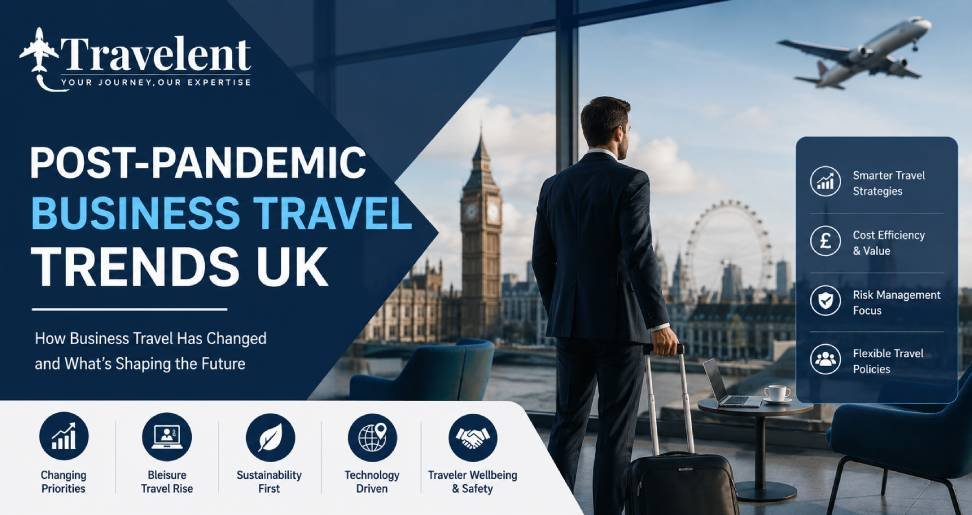
The business travel landscape in the UK has changed significantly since the pandemic. While virtual meetings and remote working have reduced the need for some traditional business trips, face-to-face meetings, conferences, client visits and international networking remain important for many organisations.
Today, UK businesses are not simply returning to the way they travelled before 2020. Instead, they are adopting a more strategic approach that focuses on value, flexibility, employee wellbeing, cost control, sustainability and traveller safety.
The UK Department for Transport’s 2025 Business Travel Survey specifically examined how domestic and international business travel has changed, along with businesses’ future travel plans and approaches to decarbonisation.
So, what does the modern post-pandemic business travel environment look like? Here are the key trends UK companies should understand.
1. Business Travel Is Becoming More Purpose-Driven
One of the biggest changes after the pandemic is that companies are asking a simple question before approving a trip: Does this journey need to happen in person?
Video conferencing has made it easier to conduct routine meetings remotely. As a result, businesses are increasingly reserving travel budgets for activities where physical presence can deliver greater value.
Examples include:
- Important client meetings
- Sales presentations
- Industry conferences
- Business negotiations
- Training programmes
- Team-building events
- Site inspections
- International networking
- Corporate events
This means business travel may be less about travelling frequently and more about travelling strategically.
2. Hybrid Working Is Influencing Corporate Travel
Hybrid working has become an established part of the UK workplace. Employees may work from home several days a week while visiting offices, clients or events when necessary.
This has created new travel patterns. Companies may organise team meetings around specific days when employees are expected to be together, while international teams may schedule quarterly or annual face-to-face events.
For travel managers, this means flexibility is increasingly important. Travel arrangements need to accommodate changing schedules without creating unnecessary costs or administrative work.
3. Traveller Safety and Duty of Care Are Higher Priorities
The pandemic demonstrated how quickly travel conditions can change. Border restrictions, health concerns and sudden disruptions highlighted the importance of having proper systems for supporting employees while they are away from home.
Today, businesses are paying greater attention to traveller safety, emergency support and travel risk.
A comprehensive Corporate travel risk management UK strategy can help organisations identify potential risks, communicate important information to travellers and establish procedures for responding to disruptions.
For companies with employees travelling internationally, this can be particularly important because risks can include transportation disruption, political instability, extreme weather, health emergencies and unexpected changes to travel requirements.
Travel management companies can provide an additional layer of support by helping businesses coordinate itineraries and respond when plans change.
4. Rail Travel Is Becoming More Attractive for European Business Trips
Sustainability and convenience are influencing how UK companies travel around Europe. For certain routes, rail can offer an efficient alternative to short-haul flights.
Eurostar provides business-focused services that allow companies to book and manage corporate journeys through its business platform. Businesses can manage bookings, view corporate travel activity and monitor spending in one place.
For companies regularly travelling between the UK and major European destinations, Eurostar business travel booking can therefore become an important part of a broader corporate travel strategy.
Rail can also make sense when city-centre connectivity, journey productivity and avoiding airport transfers are important considerations.
5. Sustainability Is Influencing Travel Policies
Environmental considerations have become increasingly relevant to corporate travel decisions.
Companies are looking at ways to reduce the environmental impact of their travel programmes without completely eliminating face-to-face business interactions.
This can involve:
- Choosing rail where practical
- Combining multiple meetings into one trip
- Reducing unnecessary short-haul flights
- Selecting hotels with appropriate sustainability policies
- Introducing travel approval processes
- Tracking corporate travel emissions
- Encouraging employees to make efficient travel choices
The goal is not necessarily to stop business travel. Instead, organisations are looking for a more responsible balance between business requirements, employee needs and environmental objectives.
6. Cost Control Is Becoming More Important
Post-pandemic business travel has also brought greater attention to budgets. Businesses need to control costs while still giving employees practical and comfortable travel options.
Last-minute bookings, changing itineraries, hotel rates and transportation costs can quickly increase the overall cost of a corporate trip.
A professional travel management partner can help companies consolidate travel arrangements, negotiate suitable options and improve visibility over travel spending.
Instead of employees independently booking flights, hotels and transfers, businesses can centralise these requirements through a structured corporate travel programme.
7. Flexibility Is Now Essential
Modern business travellers expect flexibility because business schedules can change quickly.
A client may move a meeting. A conference may change its schedule. A flight may be delayed. An employee may need to extend their stay.
This makes flexible booking and support particularly valuable.
Eurostar, for example, provides business-focused booking options and corporate travel management features designed to make business journeys easier to manage.
Travel managers are therefore increasingly looking beyond the cheapest initial fare and considering the overall value of flexibility, convenience and support.
8. Technology Is Simplifying Corporate Travel Management
Technology is another major part of the post-pandemic travel transformation.
Modern travel programmes can bring together bookings, itineraries, traveller information and travel spending, helping businesses gain better visibility into their travel activity.
However, technology alone does not eliminate the need for human support. When a traveller faces a complicated disruption or needs an urgent itinerary change, access to knowledgeable travel professionals can make a significant difference.
This is where a modern travel management company can combine technology with personalised service.
9. Business Travel Is Becoming More Personalised
Employees increasingly value travel experiences that are convenient, comfortable and aligned with their individual needs.
Businesses are consequently looking at more personalised travel arrangements rather than treating every traveller identically.
Factors such as preferred airlines, hotel preferences, loyalty programmes, schedules and trip requirements can all influence travel planning.
For senior executives, frequent travellers and international teams, personalised travel management can save considerable time while creating a smoother overall experience.
How Travelent Can Support Modern UK Business Travel
As post-pandemic travel continues to evolve, companies need more than simple flight and hotel bookings. They need a partner capable of coordinating the different elements of corporate travel while keeping convenience, efficiency and traveller support in mind.
Travelent provides comprehensive business travel management services, including flights, accommodation, itineraries and ground transportation. The company also highlights Eurostar, meet-and-greet, passport and visa assistance, accommodation and car hire among its travel services.
Travelent also states that it provides a UK-based 24/7 emergency response service, giving business travellers additional support when unexpected situations occur.
For businesses managing regular domestic or international travel, this type of centralised support can reduce administrative pressure and allow employees to concentrate on the purpose of their journey rather than the logistics.
The Future of Business Travel in the UK
The post-pandemic era has not eliminated business travel. Instead, it has changed the reasons businesses travel and the standards they expect from their travel programmes.
The future of UK corporate travel is likely to focus on purposeful journeys, flexible arrangements, stronger duty of care, sustainable transport choices, technology, cost management and personalised traveller experiences.
Companies that adapt to these trends can build travel programmes that provide better value while supporting employees and business objectives.
For organisations looking to simplify corporate travel, working with an experienced travel management partner such as Travelent can provide a more organised approach to booking, itinerary management and traveller support.
Ultimately, the future of business travel is not about travelling more or less. It is about travelling smarter, safer and with a clearer business purpose.