 442080642223
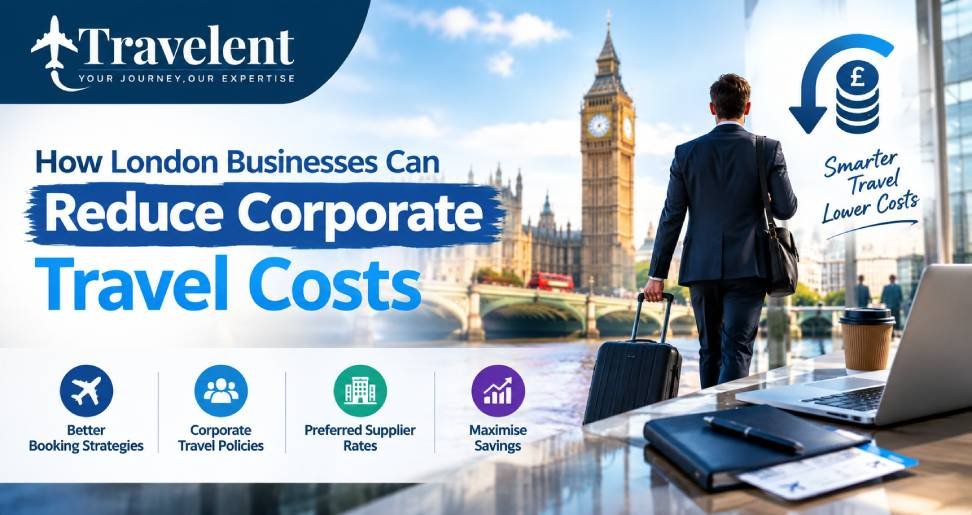
Corporate travel is an important part of doing business in London. From meeting clients and attending conferences to visiting suppliers and managing international operations, business trips can support growth and strengthen professional relationships. However, frequent travel can also become a significant expense when flights, hotels, rail journeys, airport transfers and last-minute changes are not managed strategically.
For London businesses, reducing corporate travel costs does not necessarily mean choosing the cheapest option every time. A better approach is to build a structured travel programme that balances cost, convenience, flexibility, employee needs and business priorities.
Here are practical ways London businesses can control corporate travel spending while maintaining an efficient experience for employees.
1. Create a Clear Corporate Travel Policy
One of the first steps towards controlling travel expenditure is establishing a clear corporate travel policy.
A good policy should define which travel classes employees can use, preferred airlines and hotels, advance booking expectations, spending limits, approval procedures and rules for changes or cancellations.
Without consistent guidelines, employees may make different booking decisions for similar journeys. This can make spending difficult to monitor and create unnecessary variations in travel costs.
A professional corporate travel management provider can help businesses create and implement travel policies that align with their operational requirements and budgets. Travelent, for example, supports businesses with travel policy development and compliance as part of its wider corporate travel management approach.
2. Book Flights Earlier Where Possible
Last-minute bookings can be expensive, particularly when employees need to travel during busy periods.
London businesses can reduce unnecessary airfare costs by encouraging employees to submit travel requests as early as practical. Advance planning provides more opportunities to compare schedules, fares and flexible options.
However, businesses should avoid making an “earlier is always cheaper” assumption. Certain routes, dates and business requirements may require flexibility. The objective should be to identify the most appropriate overall travel value rather than simply selecting the lowest initial fare.
Using a professional Business Travel service can help companies coordinate bookings while considering schedules, traveller requirements and available options.
3. Consolidate Corporate Travel Bookings
When employees arrange flights, hotels and transportation independently, businesses may struggle to see how much they are spending overall.
Centralising travel arrangements can provide greater visibility into corporate travel expenditure. It can also make it easier to identify frequently used routes, recurring accommodation requirements and opportunities for better supplier rates.
Travelent’s corporate travel management service brings flights, hotels, itineraries and other travel arrangements together while providing reporting and support for businesses.
For London companies with multiple employees travelling regularly, centralised management can make the entire process more organised.
4. Review Hotel Spending
Accommodation can represent a substantial portion of the total cost of a business trip.
Instead of allowing employees to select hotels independently, companies can establish preferred properties or work with a Corporate Hotel Booking Service London provider. This allows businesses to consider location, room rates, cancellation conditions and business requirements together.
A hotel that appears cheaper initially may create additional costs if it is far from a meeting location or requires expensive transportation. Therefore, businesses should evaluate the total cost of accommodation rather than focusing only on the nightly rate.
Travelent provides corporate hotel booking support designed around business travel requirements and negotiated travel options.
5. Compare the Complete Journey, Not Just the Ticket
The cheapest flight does not always produce the lowest overall travel cost.
For example, a lower-priced flight may arrive at an airport that is farther from the destination, creating additional transport costs and consuming employee time. Similarly, an inexpensive hotel may require lengthy daily journeys to meetings.
Businesses should therefore calculate the total cost of a trip, including:
- Airfare or rail fares
- Accommodation
- Airport transfers
- Ground transportation
- Meals and applicable allowances
- Change or cancellation costs
- Employee time spent travelling
This broader approach can help London businesses make more informed travel decisions.
6. Use Rail When It Makes Business Sense
For some UK and European journeys, rail can be a practical alternative to flying.
London’s strong rail connections make train travel particularly useful for certain domestic business journeys. Businesses should compare the complete journey time, station locations, fares and employee productivity before deciding between air and rail.
For international journeys, services such as Eurostar may also be relevant depending on the destination and schedule.
A structured corporate travel programme can help employees compare available transportation options rather than defaulting to a single mode of travel.
7. Reduce Last-Minute Travel Changes
Changes and cancellations can significantly increase the cost of corporate travel.
While some changes are unavoidable, businesses can reduce unnecessary expenses by improving communication between employees, managers and travel coordinators.
A central travel management partner can also help respond quickly when plans change. Travelent provides 24/7 support for booking modifications, disruptions, cancellations and alternative travel arrangements.
Fast intervention can be particularly valuable when a flight is delayed or cancelled and an employee needs to continue travelling.
8. Consider Airport Assistance for Frequent Executives
For senior employees and frequent travellers, time is often just as valuable as money.
An Executive Airport Meet and Greet Service can provide personalised airport assistance and help streamline the airport experience. For London businesses regularly arranging travel through major airports such as Heathrow, this type of support may be useful for executives, international visitors and time-sensitive journeys.
The objective is not simply to add another travel expense, but to consider whether specialist assistance can improve efficiency for travellers whose time has a high business value. Travelent offers airport assistance and meet-and-greet-related travel services as part of its wider offering.
9. Use Travel Data to Identify Savings
Businesses cannot effectively control what they cannot measure.
Regular travel reporting can reveal useful patterns, including:
- Most frequently used routes
- Average flight costs
- Hotel spending
- Booking lead times
- Policy compliance
- Travel by department
- Frequent last-minute bookings
- Opportunities for supplier negotiations
Travelent provides detailed reporting and analytics designed to give businesses greater visibility into corporate travel spending and identify potential savings opportunities.
For finance teams, this information can make travel budgeting and expense monitoring more systematic.
10. Work With a Corporate Travel Management Partner
Managing business travel internally may appear inexpensive, but the administrative workload can grow quickly as a company expands.
A professional Corporate Travel Management London partner can coordinate flights, hotels, transfers, itineraries, policy requirements and traveller support through a more structured process.
Travelent provides end-to-end corporate travel management, including flight and hotel arrangements, ground transportation, reporting, policy support and 24/7 traveller assistance.
For London businesses, this approach can help combine cost control with a more consistent travel experience.
11. Consider Bespoke Travel Strategies
Every business has different travel patterns. A consultancy may require frequent international flights, while a technology company may send teams to conferences and client meetings. A financial services firm may have different requirements again.
This is why Bespoke Business Travel Solutions can be useful. Instead of applying the same approach to every traveller, businesses can develop travel arrangements around their destinations, budgets, schedules and employee requirements.
Travelent offers tailored business travel support designed around individual organisational requirements rather than relying exclusively on standardised arrangements.
Conclusion
Reducing corporate travel costs in London is not simply about booking the cheapest flight or choosing the lowest hotel rate. Sustainable savings come from managing the entire travel programme strategically.
Businesses can start by introducing a clear travel policy, encouraging appropriate advance booking, centralising reservations, reviewing hotel expenditure, comparing complete journey costs and using travel data to identify unnecessary spending.
For organisations with regular or complex travel requirements, working with an experienced travel management partner can provide additional support. Travelent combines business travel management, hotel booking, travel policy support, reporting, airport assistance and 24/7 traveller support to help businesses manage corporate journeys more efficiently.
For London businesses looking to gain better visibility over travel spending while keeping employees productive and supported, a structured corporate travel strategy can be an important part of long-term cost management.