 442080642223
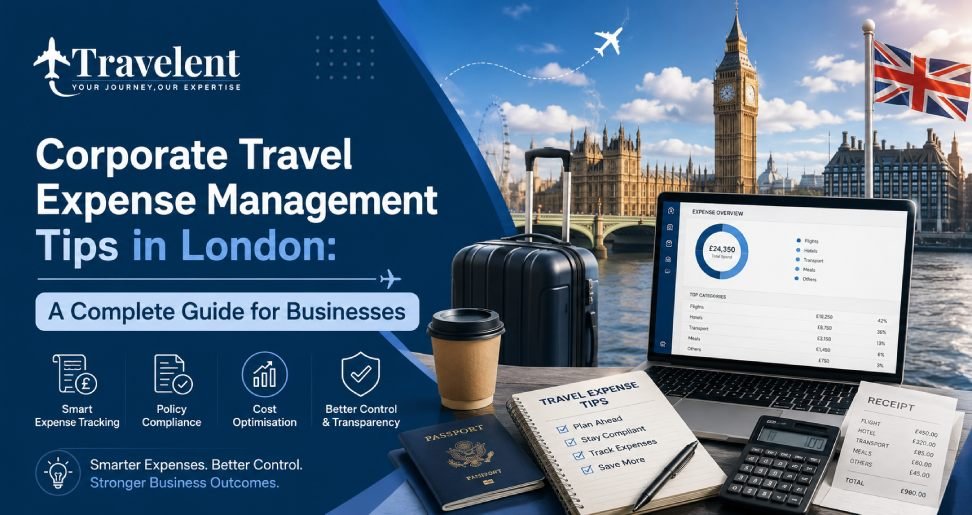
Managing business travel in one of the world’s busiest commercial hubs can quickly become challenging. From rising hotel costs to transport expenses and last-minute itinerary changes, companies operating in London need a smarter approach to controlling travel spend without compromising employee experience.
Whether you’re a startup in Shoreditch, a financial firm in Canary Wharf, or a multinational with frequent business travellers, implementing an effective corporate travel expense strategy can significantly improve your financial control and operational efficiency.
In this guide, we’ll explore practical corporate travel expense management tips in London that help businesses reduce costs, improve compliance, and simplify travel administration.
Why Corporate Travel Expense Management Matters
London remains one of Europe’s leading business destinations, attracting thousands of corporate travellers every day. While business travel drives growth through client meetings, conferences, networking, and project management, it can also become one of the largest controllable business expenses if left unmanaged.
Without a structured expense management process, companies often experience:
Overspending on flights and hotels
Delayed expense claims
Missing receipts
Budget overruns
Poor visibility into travel spending
Difficulty complying with HMRC expense requirements
Creating clear travel policies and using professional travel management support helps businesses gain better financial control while improving employee satisfaction. HMRC also requires eligible business travel expenses to meet specific criteria, making accurate record-keeping essential.
1. Create a Clear Corporate Travel Policy
The foundation of effective travel expense management is a well-defined travel policy.
Your policy should outline:
Approved airlines and hotels
Daily meal allowances
Transportation guidelines
Booking procedures
Expense submission deadlines
Reimbursement timelines
Approval workflows
Employees are far more likely to stay within budget when expectations are clearly communicated before they travel.
For London-based businesses, it’s also useful to define spending limits for different areas, as accommodation costs vary significantly between Central London, Canary Wharf, Westminster, and outer boroughs.
2. Encourage Advance Booking
Last-minute bookings are one of the biggest causes of inflated travel expenses.
Whenever possible:
Book flights several weeks in advance
Secure hotels early during conference seasons
Reserve rail tickets ahead of travel
Plan airport transfers before arrival
Advance planning often results in substantial savings while providing employees with more travel options.
A dedicated corporate travel management provider can also negotiate better rates through established supplier relationships.
3. Centralise Travel Bookings
Allowing employees to book independently across multiple platforms creates inconsistent pricing and limited spending visibility.
Instead, centralise bookings through one travel management solution.
Benefits include:
Better negotiated corporate rates
Consistent supplier selection
Improved reporting
Simplified approvals
Easier itinerary management
Stronger policy compliance
Centralised booking also helps finance teams reconcile expenses much faster.
4. Digitise Expense Reporting
Manual spreadsheets and paper receipts are time-consuming and prone to errors.
Modern businesses should adopt digital expense reporting that allows employees to:
Upload receipts instantly
Track expenses in real time
Categorise spending automatically
Submit claims electronically
Digital records improve accuracy while reducing administrative work for finance departments.
5. Monitor Travel Spending Regularly
Expense management should never happen only after a trip is completed.
Instead, review travel spending monthly by analysing:
Average trip costs
Hotel expenditure
Flight pricing trends
Department budgets
Frequent traveller expenses
Policy exceptions
Regular reporting highlights unnecessary spending and identifies opportunities for cost optimisation.
Modern travel management solutions provide dashboards that offer complete visibility across business travel programmes.
6. Understand HMRC Travel Expense Rules
For UK businesses, compliance is just as important as cost control.
Not every travel expense qualifies for tax relief.
Generally, allowable business travel includes journeys made wholly and exclusively for business purposes, while ordinary commuting to a permanent workplace typically does not qualify. Maintaining accurate documentation—including dates, destinations, business purpose, and receipts—is essential.
Working with experienced travel professionals helps businesses maintain compliant travel records while simplifying reimbursement processes.
7. Choose Accommodation Strategically
London hotel prices fluctuate significantly depending on location and season.
Rather than automatically selecting city-centre hotels, businesses should consider:
Proximity to meeting locations
Access to Underground stations
Corporate negotiated rates
Flexible cancellation policies
Long-stay discounts
A slightly different location can often reduce accommodation costs without sacrificing convenience.
8. Use Professional Corporate Travel Management
Many organisations spend countless hours comparing flights, hotels, and transport options.
Partnering with a specialist travel management company removes much of this administrative burden.
A professional provider assists with:
Flight bookings
Hotel reservations
Rail travel
Ground transportation
Itinerary planning
Emergency travel changes
Cost optimisation
Traveller support
This allows employees to focus on business objectives rather than travel logistics.
One example is Travelent, a London-based travel management company that provides tailored business travel services. Travelent supports organisations by managing flights, accommodation, transport, and personalised itineraries while helping streamline the overall travel experience for corporate travellers.
Rather than managing multiple suppliers independently, businesses benefit from having one dedicated point of contact for their travel requirements.
9. Review Supplier Performance
Corporate travel isn’t just about finding the cheapest option.
Businesses should regularly evaluate suppliers based on:
Reliability
Service quality
Flexibility
Cancellation policies
Customer support
Value for money
Strong supplier relationships often lead to better pricing and improved traveller experiences over time.
10. Focus on Traveller Experience
Cost savings should never come at the expense of employee wellbeing.
Frequent business travellers perform better when they experience:
Comfortable accommodation
Reliable transportation
Smooth booking processes
Quick travel support
Flexible itinerary management
A balanced travel programme improves productivity while reducing travel-related stress.
Why London Businesses Need Smarter Travel Management
As London continues to attract global business activity, travel costs remain a significant operational expense for organisations of every size.
Successful companies don’t simply reduce travel budgets—they optimise how travel is planned, booked, monitored, and managed.
Combining clear expense policies, digital reporting, centralised bookings, and professional travel management creates long-term savings while delivering a better experience for employees.
Final Thoughts
Effective corporate travel expense management in London is about much more than controlling costs. It involves improving financial visibility, ensuring HMRC compliance, streamlining administrative processes, and supporting employees throughout every business trip.
Businesses that invest in smarter travel management often experience lower operating costs, stronger policy compliance, faster expense processing, and greater productivity.
For organisations seeking a more efficient approach, Travelent offers comprehensive corporate travel management services tailored to business needs. From organising flights and accommodation to handling itineraries and ground transport, Travelent enables companies to simplify business travel while maintaining control over expenses and delivering a seamless travel experience